
A water stain spreads across your ceiling after Hurricane Isaias. Your roof sustained wind damage, and rain found its way inside. But when you report the damage, your insurance company says it was caused by “wind-driven rain” and may not be covered.
Does that explanation end your claim?
Not necessarily. The important questions include how the rain entered, whether wind damaged the structure first, and what your policy actually says. Calling water “wind-driven rain” does not, by itself, resolve those questions.
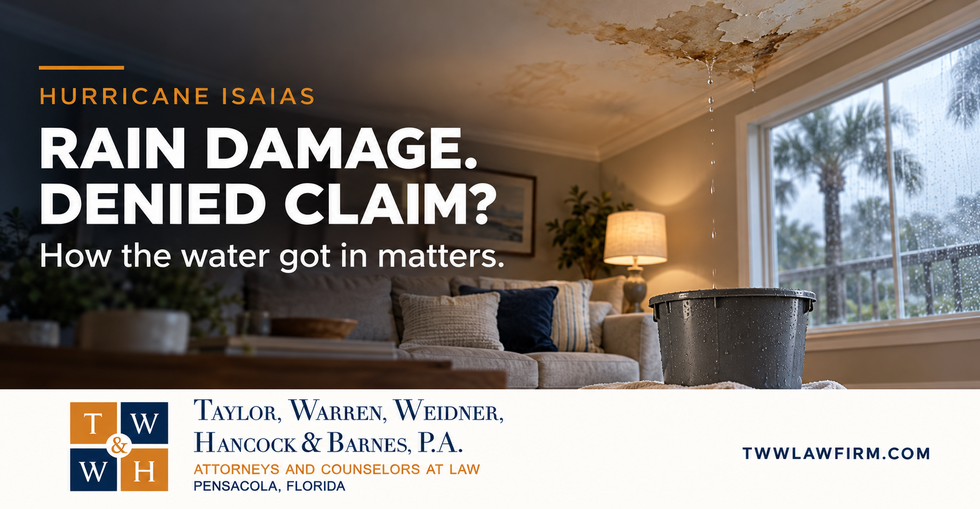
When the Wind Opens the Door to Rain
Hurricane damage can involve a chain of events: wind damages the building, rain enters through that damage, and the water harms ceilings, walls, flooring, or belongings.
Florida Statute § 627.4025(2)(a) specifically includes resulting interior rain damage within its definition of hurricane coverage when the direct force of windstorm first damages the building and creates an opening through which rain enters.
For example, wind may damage a roof covering or break a window, allowing rain inside. Whether a particular loss qualifies depends on the evidence, applicable coverage, and policy terms.
Why the Insurance Company May Dispute Coverage
An insurer may argue that rain entered through an existing leak, deteriorated seal, or another condition unrelated to storm damage. Some policies restrict interior rain coverage unless a covered peril first creates an opening in the roof or walls.
The distinction matters. Rain entering through an intact structure can present different coverage questions from rain entering through damage caused by the hurricane.
Review the insurer's explanation carefully:
- Does it identify the exclusion or limitation being applied?
- Does it explain where the water entered?
- Does it address the wind damage you reported?
- What evidence supports its conclusion?
Policy language varies. A reference to “wind-driven rain” should lead to a closer examination of the entry path and applicable terms.
Evidence Should Connect the Exterior and Interior Damage
Photographs of a stained ceiling show the result. Your claim may also need evidence explaining the cause.
Useful documentation can include:
- Photographs of damaged roofing, windows, or exterior components
- Pictures showing the location and progression of interior damage
- Inspection findings identifying a possible water-entry point
- Records of when you first noticed the leak
- Earlier photographs or maintenance records showing the property's condition
- Reports explaining how the exterior damage relates to the interior loss
A qualified professional may help investigate that connection. A ceiling stain alone does not establish a storm-created opening, and damage elsewhere on the roof does not necessarily explain a particular leak. The evidence should address the actual route the water took.
Protect Your Home While Preserving the Evidence
Do not leave your home exposed while a coverage disagreement continues. Arrange reasonable emergency protection, such as professional tarping or boarding, when needed and safe.
Before damaged materials are removed, document their condition when possible. Keep emergency repair invoices, photographs, inspection reports, and communications with the insurer. Notify the carrier promptly about additional damage and coordinate opportunities for inspection.
Never climb onto a damaged roof to gather evidence yourself. Florida's Insurance Consumer Advocate recommends securing the property, reporting damage, and making emergency repairs after a disaster.
Why Legal Representation Matters
A disputed interior water claim may require both policy analysis and a careful investigation of how the damage occurred.
An attorney can help:
- Review the policy provisions cited by the insurer
- Evaluate the denial against the available evidence
- Identify gaps in the carrier's explanation
- Coordinate appropriate professional assessments
- Present a supported request for reconsideration
- Evaluate further options if the dispute remains unresolved
The Bottom Line from Taylor, Warren, Weidner, Hancock & Barnes
If your insurer attributes interior damage to wind-driven rain, ask whether its explanation accounts for the hurricane's damage to your home.
At Taylor, Warren, Weidner, Hancock & Barnes, P.A., we help Florida homeowners challenge disputed insurance decisions and pursue benefits available under their policies. Contact us to discuss your Hurricane Isaias claim and understand your legal options.


Comments
There are no comments for this post. Be the first and Add your Comment below.
Leave a Comment