
When an electric bicycle collides with a pedestrian, many people immediately assume the rider must be at fault.
After all, pedestrians are generally considered the most vulnerable people using sidewalks and shared paths.
But like most personal injury cases, the answer isn't always that simple.
Sometimes an e-bike rider is clearly responsible. Other times, the pedestrian's own actions may contribute to the collision. In many cases, both people share some degree of responsibility.
Understanding how these accidents happen can help everyone make safer decisions.
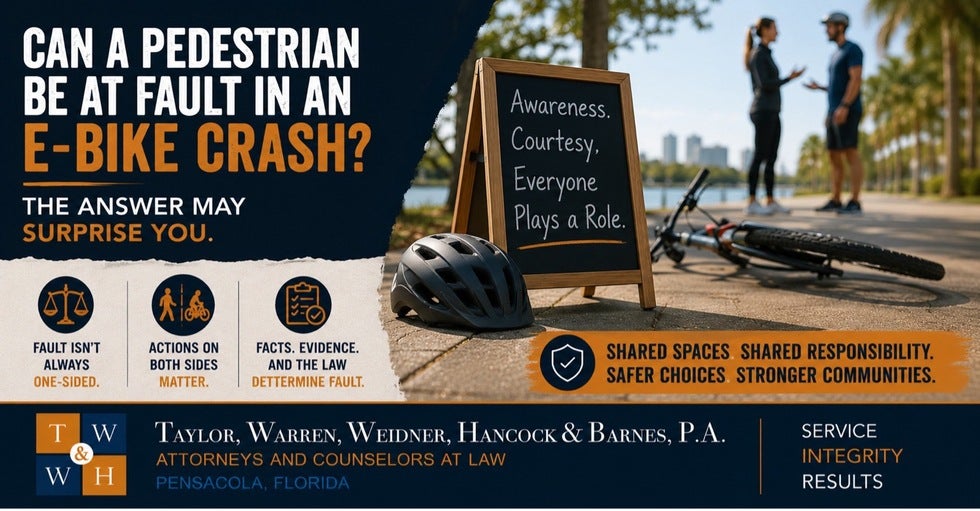
Every Crash Is Different
Imagine a few common scenarios.
A pedestrian suddenly steps into a bike lane while looking at a phone.
A jogger wearing noise-canceling headphones unexpectedly changes direction.
A rider travels too fast through a crowded sidewalk without giving an audible warning.
A family exits a restaurant directly into the path of an approaching e-bike.
In each example, several factors may have contributed to the crash.
Determining responsibility often requires looking at the actions of everyone involved—not just one person.
Florida Uses Comparative Negligence
Florida follows a legal principle known as modified comparative negligence.
In simple terms, this means that more than one person can share responsibility for an accident.
For example, an investigation might conclude that:
- An e-bike rider was traveling too fast.
- A pedestrian stepped into the rider's path without looking.
- Poor visibility near a building entrance also contributed to the collision.
Rather than placing all of the blame on one individual, responsibility may be divided among the parties based on the facts of the case.
This is one reason investigators carefully review witness statements, photographs, surveillance video, and the physical evidence before reaching conclusions.
You can learn more about Florida's comparative negligence law through the Florida Legislature:
https://www.leg.state.fl.us/
Small Decisions Can Have Big Consequences
Many e-bike collisions happen because someone simply didn't expect another person's movement.
Pedestrians can reduce risk by:
- Looking before crossing bike lanes.
- Avoiding distractions from phones.
- Keeping children close in crowded areas.
- Remaining aware of approaching riders.
Likewise, e-bike riders should:
- Slow down around pedestrians.
- Give an audible warning before passing.
- Yield where required by law.
- Anticipate that someone may unexpectedly step into their path.
These simple habits can prevent many crashes before they happen.
Evidence Matters
Following an e-bike collision, determining exactly what occurred isn't always easy.
Unlike automobile accidents, many bicycle crashes happen without dash cameras or independent witnesses.
That's why documenting the scene can be so important.
Photographs, nearby surveillance cameras, witness information, helmet camera footage, and police reports may all help establish what happened.
The more information available, the easier it becomes to understand how the collision occurred and whether multiple factors contributed.
Safety Is a Shared Responsibility
As electric bicycles become more common throughout Florida, sidewalks and shared-use paths are changing.
Everyone using these spaces—whether walking, jogging, cycling, or riding an e-bike—has a role in preventing injuries.
Courtesy, communication, and patience often make the greatest difference.
A rider slowing down before passing.
A pedestrian looking up before changing direction.
A driver checking carefully before crossing a sidewalk.
These small decisions can prevent life-changing accidents.
For additional bicycle and pedestrian safety information, the Florida Department of Highway Safety and Motor Vehicles offers helpful resources for everyone sharing Florida's roads and pathways:
https://www.flhsmv.gov/safety-center/driving-safety/bicycle-safety/
The Bottom Line from TWWLAWFIRM.COM
E-bike crashes are rarely as simple as they first appear. While riders have a responsibility to operate safely, pedestrians also play an important role in preventing collisions.
The safest approach is to assume that everyone sharing a sidewalk, trail, or bike lane may make an unexpected move. A little extra awareness, patience, and communication can help keep Florida's growing number of riders and pedestrians safe.
If a serious collision does occur, understanding exactly how the accident happened is often the first step toward determining who may be legally responsible.


Comments
There are no comments for this post. Be the first and Add your Comment below.
Leave a Comment