
When a child is injured at a trampoline park, parents often blame themselves. “I was right there.” “I was watching the whole time.” “Someone was supervising.” Because of that, many families never explore whether they may have a valid injury claim. That hesitation is understandable—but in many cases, it's misplaced.
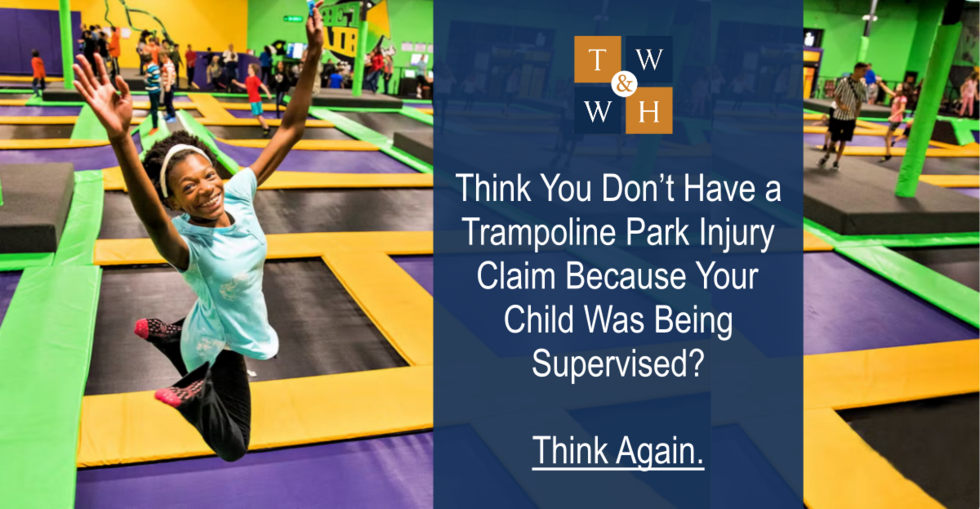
At Taylor, Warren, Weidner, Hancock & Barnes, we regularly speak with parents who assume supervision automatically shifts responsibility away from the trampoline park. In reality, supervision does not eliminate a trampoline park's legal duty to keep children safe.
Supervision Does Not Equal Safety
Trampoline parks market themselves as family-friendly entertainment venues designed specifically for children. With that marketing comes a legal responsibility: to maintain a reasonably safe environment. Even when parents or staff members are supervising, the park still controls critical safety factors—equipment condition, jump surface design, crowding levels, staff training, and rule enforcement.
A parent watching from the sidelines cannot inspect spring integrity, padding quality, or structural wear. Nor can they control whether the park allows too many jumpers in a confined area or fails to intervene when risky behavior escalates. Supervision does not replace proper safety protocols.
When Supervision Fails to Prevent Injury
We frequently see injuries occur despite active supervision because the underlying cause has nothing to do with parental oversight. Common examples include:
- Overcrowded jump zones that increase collision risks
- Mixed age or weight groups jumping together
- Worn or defective trampoline surfaces
- Inadequate padding around frames or walls
- Poorly trained staff who fail to enforce safety rules
In these situations, a child may follow the rules perfectly—and still be seriously injured.
The Myth of “You Were Watching, So It's Your Fault”
Insurance companies love to focus on supervision because it provides an easy narrative: someone else should have prevented this. But legally, that argument often falls apart. Trampoline parks are commercial businesses that invite the public onto their premises for profit. They cannot outsource safety to parents or guardians. Even when a staff member is supervising, liability may still exist if supervision is insufficient, inattentive, or unsupported by proper safety procedures. Watching children jump is not the same as preventing dangerous conditions.
Most Injuries Happen in Seconds
Trampoline park injuries are rarely minor. We routinely see fractures, head injuries, spinal trauma, and long-term orthopedic damage—sometimes from a single jump. These injuries can require surgery, extended rehabilitation, and time away from school and normal childhood activities.
When the injury could have been prevented through better design, staffing, or enforcement, the park may be legally responsible—regardless of who was watching.
Don't Let Assumptions Cost Your Family
If your child was injured at a trampoline park, don't assume supervision eliminates your rights. Liability depends on facts—not guilt, hindsight, or insurance company talking points.
At Taylor, Warren, Weidner, Hancock & Barnes, our experienced team of personal injury attorneys evaluate trampoline park injury claims carefully and honestly. If a park failed to protect your child, we believe it should be held accountable.
If you have questions about a trampoline park injury, we're here to help you understand your options—and your rights.


Comments
There are no comments for this post. Be the first and Add your Comment below.
Leave a Comment