
Trampoline parks are marketed as fun, high-energy spaces for kids to burn off steam. But when a child is seriously injured at one of these facilities, parents are often told the same thing: your child broke the rules, so the park isn't responsible. That message can feel definitive—and discouraging. In reality, it's often incomplete and misleading.
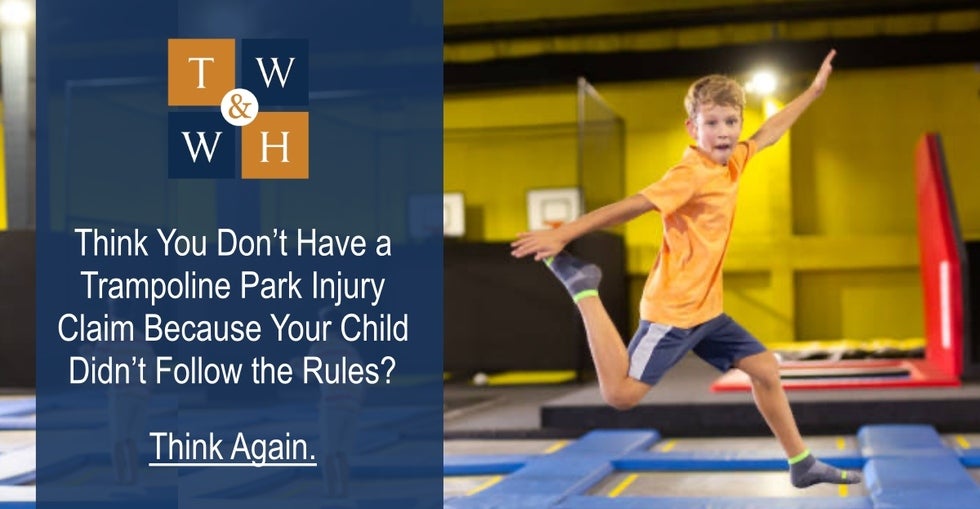
At Taylor, Warren, Weidner, Hancock & Barnes, P.A., we regularly speak with families who assume they have no legal options because their child didn't jump “properly,” collided with another participant, or failed to follow posted instructions. The truth is far more nuanced.
Rule-Breaking Does Not Automatically Eliminate Liability
Children are, by nature, impulsive. Trampoline parks know this. That's why they have a heightened duty to anticipate unsafe behavior and take reasonable steps to prevent foreseeable injuries. A child not following the rules does not automatically absolve a trampoline park of responsibility—especially if the park's own practices contributed to the injury.
For example, many trampoline park injuries stem from:
- Poor supervision or understaffing
- Inadequate separation by age, size, or skill level
- Overcrowded jumping areas
- Defective or poorly maintained equipment
- Dangerous park layouts that increase collision risks
- Failure to enforce the rules, even
If a park fails to enforce its own rules, allows unsafe conditions to persist, or creates an environment where injuries are likely, it may still be legally responsible—even if a child technically violated a rule.
What About Waivers?
Most trampoline parks require parents to sign liability waivers. These documents are often presented as iron-clad protection for the business, but under Florida law, they are not always enforceable. Waivers generally do not protect a company from liability for their own negligence if that negligence contributed to, or caused, an injury.
In other words, a waiver does not give a trampoline park a free pass to operate unsafely.
Comparative Fault and Children
Florida law also recognizes that fault can be shared. Even if a child's actions played some role in an injury, that does not necessarily bar a claim. Importantly, children are held to different standards than adults, and very young children may not be legally capable of being “at fault” at all.
Each case depends on the specific facts—how the injury happened, how the park was operated, and whether reasonable safety measures were in place.
Why It's Important to Ask Questions Before Assuming “No Case”
Trampoline park injuries can result in broken bones, head injuries, spinal damage, and long-term medical complications. When families assume they have no claim, they may be left paying medical bills and facing lasting consequences without exploring their legal rights.
If your child was injured at a trampoline park, don't let a rule violation—or what the park tells you—be the final word. A careful legal review by our experienced personal injury team can uncover whether the park failed in its responsibilities and whether compensation may still be available.
At Taylor, Warren, Weidner, Hancock & Barnes, P.A., we believe parents deserve clear answers, not blanket denials. If you have questions about a trampoline park injury, speaking with an experienced attorney can help you understand your options and protect your child's future.


Comments
There are no comments for this post. Be the first and Add your Comment below.
Leave a Comment